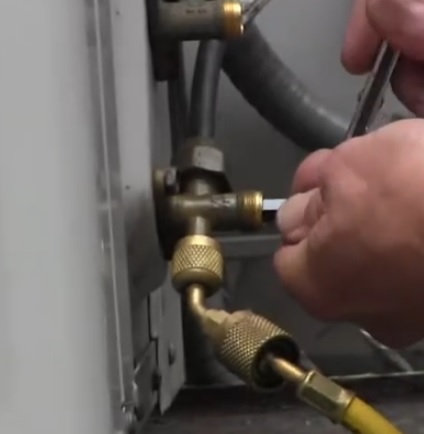
Pumping down an HVAC system is routinely done for many reasons, such as moving a unit, replacing the line-set, or general repairs.
The Pumping down of a unit should no be confused with vacuuming a unit down which are separate.
Some basic tools will be needed such as HVAC gauges, Allen key, and crescent wrench.
What Is Pumping Down an Mini Split System?
When an HVAC unit is pumped down, all the refrigerant is pulled into the outside condenser for storage.
Most all mini split systems come with the refrigerant stored in the outside condenser and released into the system after being vacuumed down.
Pumping down a unit is placing the unit back into its original state of storage.
Why Is a Mini Split Pumped Down?
A mini split is usually pumped down when being moved, or the line set is being worked on.
The refrigerant can be stored in the outside condenser, which is in the same state as when shipped from the manufacturer.
Having the refrigerant locked into the outside condenser makes it easy to relocate a unit and release the refrigerant after it has been moved and set up.
Tools Needed Pump Down a Mini Split HVAC System
- HVAC Gauges
- Allen Key
- Screwdriver
- Crescent Wrench
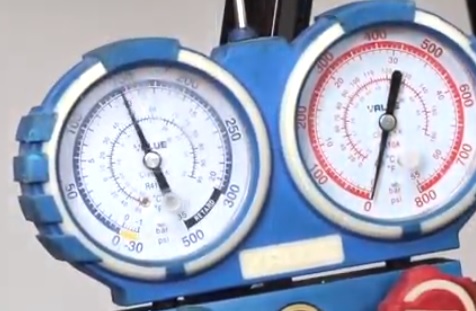
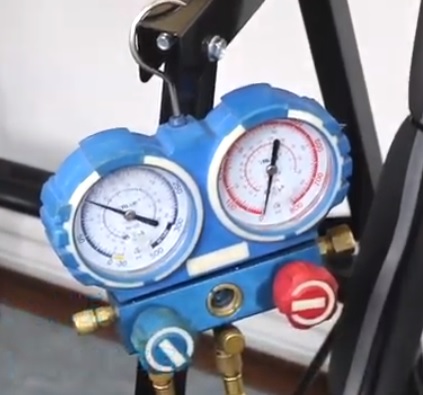
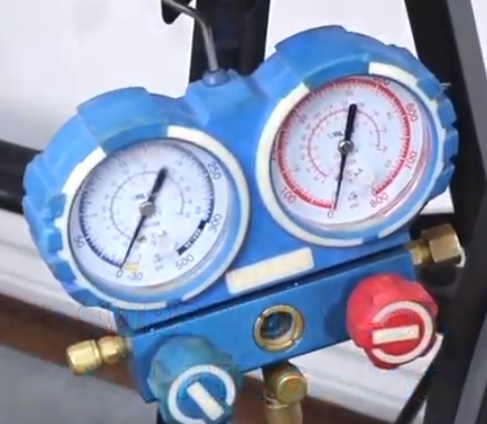
HVAC gauges will be needed to watch the pressure on the low side gauge.
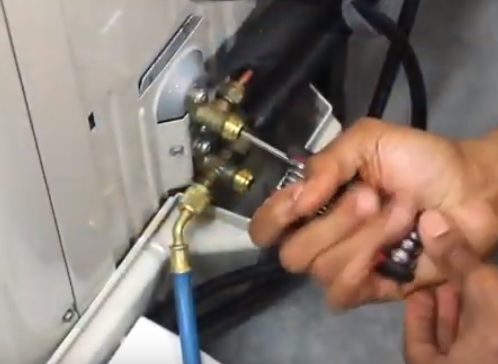
An Allen key is also needed to shut off the high and low-pressure valves to lock the refrigerant inside.
A screwdriver will be needed to remove the cover and wrench to remove the caps protecting the valves.
Steps To Pump Down a Mini Split HVAC Unit
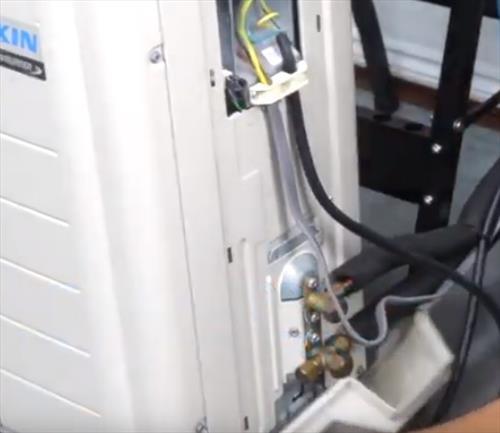
- Remove the cover on the outside condenser.
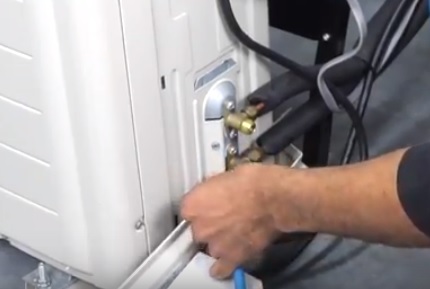
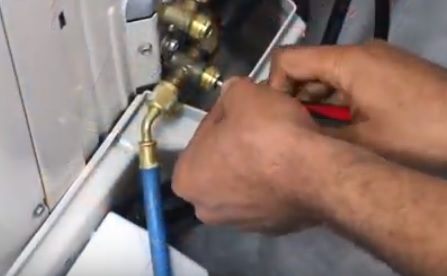
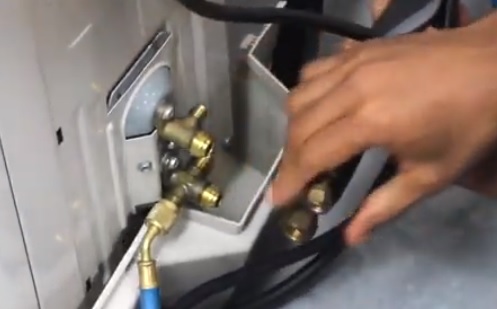
- Remove the service valve caps for the high and low pressure lines.
- Attach HVAC gauges to the Low side (Big Line) service valve.
- The Pressure on the Gauges Low side (Blue) will rise.
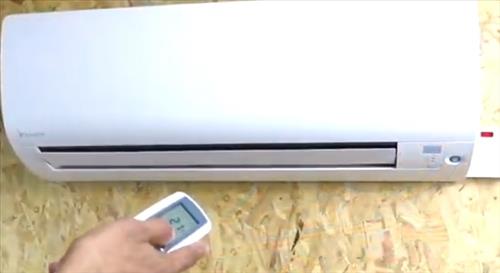
- Power On the Mini Split Unit and put it in Cooling Mode.
- Watch the HVAC Gauges Low Side (Blue) the pressure will begin to drop.
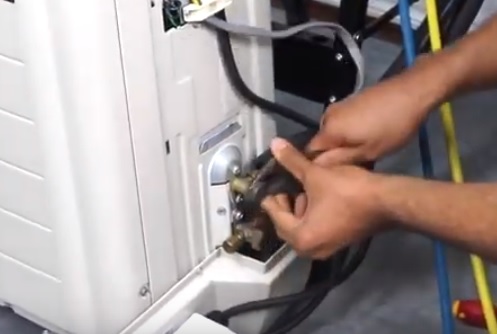
- Use an Allen Key to shut the High Pressure line off (Small Line).
- Watch the gauges for the pressure to drop to zero.
- Once the pressure drops to zero, use an Allen Key to shut the Low Pressure line off (Big-Line).
- The unit should now be pumped down with all the refrigerant in the outside condenser.
I am replacing all of my Condensors but would like to keep the same evaporator (Gree) same brand. The communication wires are different. My old communication wire is already buried in deep in the siding as I just had it done. Can I still use the old communication wires for the old evaporator to the new condenser or do I have to run a new wire? They are 18K each single zone and will be replaced with 18K single zone evaporator. I am replacing them as they are newer upgrade.
I installed a brand new unit. Performed an Evac using vacuum pump and manifold analog gauges. After 45 minutes, and the blue gauge was at negative 30, I shut off the manifold gauge valve and then powered down the vacuum pump. Instantly the blue gauge went from negative 30 to zero.
Rechecked all connections, used nylog blue, tightened everything again. Performed another Evac. Back to Zero at disconnect. Tried 3 more times, each time rechecking connections. Nothing works.
Do I have a defective unit?
I’ve read that some copper tubes come flared improperly from China. That would constitute defective unit in my book. I think after all my work I have to send this unit back. I can’t think of anything else to do.
When there is a leak on a new unit, it is usually the flares on the line set. The unit may also be damaged and have a leak, but that is rare. Usually, it’s a line set issue.
“You need an HVAC tech to vacuum down the system”, “call a tech before you ruin your unit”, etc. Not so. Vacuuming down a mini split system is easily done by a DIY’er that can follow simple instructions. A vacuum pump and analog gauge system on Amazon is about $105 (USD) (VTG VOGTEN 4.5 CFM AC Vacuum Pump and Gauge Set,for Mini Split/HVAC/Auto Systems).
A great step-by-step video on how to vacuum a system (a line set) is on YouTube by a channel named “HVAC Mechanic”. The name of the video is “Step by Step How to Vacuum Down Mini Split Using Analog Gauges Release Refrigerant Check for Leaks”. That video has a link to this page, in fact.
Note: When ordering the pump and gauge set, don’t forget to order the separate 5/16″ to 1/4″ adapter (watch the video) and Nylog Refrigerant Thread Sealant. (Disclaimer: I have no affiliation whatsoever with these sellers or products)
This can be done without a gauge set, run the unit in cooling mode for a few minutes and then screw the high side valve (small tube) all the way in. Keep running the unit for a few minutes and then screw the lowside valve all the way in. The outside unit now contains the refrigerant. And the inside unit and gas/liquid lines can be removed. I make no claims about proper procedures for doing this, but it is better to pump the unit down and contain as much refrigerant as possible than to disconnect the piping without pumping the system down at all
You cant, once you put the unit back, the lines and inside unit have to be vacuumed down to remove air and moisture, you need to call a tech before you ruin your unit(s)
Hi,
I have one question about outdoor unit CAREER can be replaced by GREE out door unit, wiring can match for both. Pls advice
Thank you
They will need to match.
Hi, Is the compressor able to draw a full vacuum on the line set and evaporator? If not, what percentage of refrigerant is recovered using this technique?
You need an HVAC tech to vacuum down the system. Upon repairs they can recharge the system.
Do you have to pump down – or can it run without doing that
I just read : “Steps To Pump Down a Mini Split HVAC System”
Step 5 indicates:
5. Power On the Mini Split Unit and put it in Cooling Mode.
My interior Mini-Split unit is defective and cannot be put in “Cooling Mode”.
What are the steps that should be followed in this situation ?
Same here.
I found this on another site: “unscrew the copper pipe which connects the inside and outside units. Put a bucket or tray underneath each side in order to catch spills from the refrigerant or “bleed” the system before removing.
Then, unscrew the inside unit from the wall, and place on a table with newspaper or something similar. Remove any wires or parts that might be needed, and leave it to empty itself of refrigerant.”
Doesn’t sound environment friendly but beats trying to find HVAC gauges I guess…I’ll probably try this.